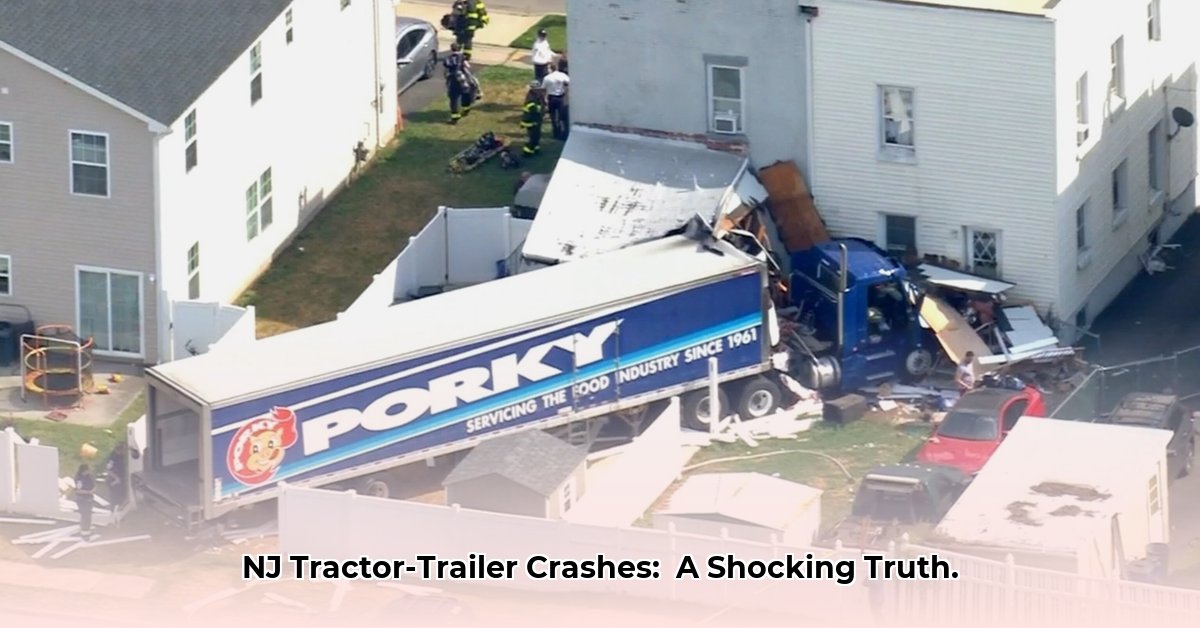
The shared roadways of New Jersey present a significant safety challenge, particularly concerning the intersection of tractor-trailers and passenger vehicles. The sheer mass and momentum of these large trucks dramatically increase the potential for severe consequences in collisions. Recent accidents in locations such as Fairview and Burlington Township underscore this critical issue, highlighting the urgent need for comprehensive safety improvements. How can we mitigate the risks posed by these massive vehicles and ensure safer roadways for all? For more information on brake system failures, see this helpful resource on brake system safety.
Understanding the Contributing Factors
Several interconnected factors contribute to the frequency and severity of New Jersey tractor-trailer accidents. These include, but are not limited to:
- Brake System Failures: Malfunctioning brakes frequently emerge as a primary contributing factor in severe incidents. Neglecting routine maintenance, overlooking warning signs, and inadequate repair practices all contribute to this significant risk.
- Driver Fatigue and Inadequate Training: Driver error, often exacerbated by fatigue and insufficient training, plays a substantial role in accidents. Insufficient rest periods, improper handling of large vehicles in challenging conditions, and a lack of defensive driving skills are all major concerns.
- Roadway Conditions and Infrastructure: Inadequate road design, poor signage, and poorly maintained infrastructure can contribute to accidents. Lack of sufficient visibility, poorly marked lanes, and hazardous roadway features exacerbate risk.
The Fairview accident, for example, initially indicated a potential brake system failure as a contributing factor, though a complete investigation is pending. The Burlington Township incident, involving a minivan and a tractor-trailer, dramatically illustrates the disproportionate impact on smaller vehicles in such collisions. These are not isolated incidents; they represent a pattern indicative of broader systemic problems.
Actionable Strategies for Prevention
Addressing this complex problem demands a coordinated effort from various stakeholders, including trucking companies, the New Jersey Department of Transportation (NJDOT), law enforcement agencies, and insurance providers. A comprehensive approach incorporating both immediate and long-term solutions is crucial.
Immediate Actions (Within the Next Year)
For Trucking Companies:
- Enhanced Vehicle Inspections: Implement mandatory, comprehensive brake system inspections exceeding minimum regulatory requirements. These should include both visual inspections and functional testing. Efficacy Target: 95% reduction in brake-related failures within 12 months.
- Comprehensive Driver Training: Implement revised driver training programs emphasizing safe braking techniques, handling large vehicles on inclines, and defensive driving strategies. Efficacy Target: 80% improvement in driver competency as measured by standardized assessments.
- Stringent Maintenance Scheduling: Establish and strictly adhere to detailed vehicle maintenance schedules, meticulously documenting all procedures and findings. Efficacy Target: 75% reduction in maintenance-related breakdowns.
- Real-Time Monitoring: Integrate GPS tracking and telematics systems to monitor vehicle location, speed, and potential hazards in real-time. Efficacy Target: 60% reduction in speed-related accidents.
For the NJDOT:
- Roadway Infrastructure Improvements: Prioritize improvements to roadway infrastructure in high-accident areas, focusing on enhanced signage, improved lane markings, and improved road design to maximize visibility. Efficacy Target: 50% reduction in accidents at targeted locations within 2 years.
- Increased Enforcement of Regulations: Increase the frequency and rigor of inspections for commercial vehicles, imposing stricter penalties for violations. Efficacy Target: 25% increase in commercial vehicle compliance.
For Law Enforcement:
- Targeted Roadside Inspections: Conduct more frequent roadside inspections, prioritizing brake system checks and driver qualification verification. Efficacy Target: 40% increase in the number of commercial vehicle inspections.
- Strict Speed Enforcement: Enforce speed limits rigorously, particularly for heavy trucks in areas identified as hazardous. Efficacy Target: 30% reduction in speeding violations by commercial vehicles.
Long-Term Solutions (Over the Next 3-5 Years)
For Trucking Companies:
- Adoption of Advanced Safety Technologies: Invest in and integrate advanced driver-assistance systems (ADAS), such as automatic emergency braking (AEB) and lane departure warning systems. Efficacy Target: 90% adoption rate within 5 years.
- Proactive Driver Risk Management: Develop comprehensive driver profiles, assessing individual risks and providing targeted training to address specific weaknesses. Efficacy Target: 70% reduction in driver-related incidents within 5 years.
- Predictive Maintenance Programs: Implement advanced predictive maintenance using data analytics to anticipate potential mechanical failures before they occur. Efficacy Target: 85% reduction in preventable mechanical failures.
For the NJDOT:
- Smart Transportation System Development: Develop and implement a statewide intelligent transportation system (ITS) integrating real-time data on traffic flow, hazardous conditions, and heavy vehicle locations. This system should facilitate improved communication between vehicles and emergency services. Efficacy Target: Completion of a fully functional ITS within 5 years.
- Sustained Infrastructure Funding: Secure and allocate dedicated funding for substantial improvements to roadway infrastructure, prioritizing areas with a history of high accident rates. Efficacy Target: Complete infrastructure upgrades in high-risk areas within 5 years.
For Law Enforcement:
- Data-Driven Enforcement Strategies: Utilize accident data analytics to identify accident hotspots and allocate resources effectively and strategically. Efficacy Target: 50% improvement in resource allocation efficiency within 3 years.
- Enhanced Collaboration: Develop and foster collaboration with trucking companies to share data and monitor driver performance, offering feedback for ongoing improvement. Efficacy Target: 80% participation rate from major trucking companies within 3 years.
For Insurance Companies:
- Risk-Based Insurance Premiums: Implement risk-based insurance premiums, incentivizing trucking companies to invest in safety technologies and driver training. Efficacy Target: 75% adoption of risk-based premiums within 5 years.
- Incentivize Safety Initiatives: Develop programs that directly incentivize adoption of advanced safety measures and continuous improvement initiatives. Efficacy Target: 60% participation rate from major trucking companies within 5 years.
Preliminary Risk Assessment Matrix
While a comprehensive risk assessment requires extensive data analysis, preliminary findings indicate key areas demanding immediate attention:
| Factor | Likelihood of Failure | Severity of Impact | Risk Level |
|---|---|---|---|
| Brake System Failure | Medium | High | High |
| Inadequate Driver Training | Medium | Medium | Medium |
| Poor Road Infrastructure | Low | Medium | Low |
| Lack of Advanced Safety Tech | High | High | High |
This matrix underscores the urgent need to address brake system failures and the lack of advanced safety technologies. Ongoing research and data collection will refine this assessment and identify additional contributing factors. The ultimate goal is to create a safer transportation environment for all road users in New Jersey. A collaborative, multi-faceted approach remains crucial in achieving this objective. "The data clearly shows the devastating impact of these accidents," says Gary Martin Hays, a leading expert in truck accident litigation. "A proactive, comprehensive approach is essential to mitigating these risks."